
Adoption of AI in Eye Care
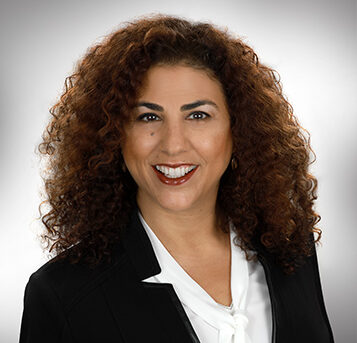
Dr. Sharon Bakalash, MD, PhD, is an ophthalmic surgeon and life sciences executive with over 20 years of experience across pharmaceuticals, medical devices, and advanced therapies. Throughout her career, she has consulted with multiple pharma and device companies, advising on clinical strategy, innovation, and portfolio development.
She has been at the forefront of integrating artificial intelligence into ophthalmology, with a particular focus on translating emerging technologies into real-world clinical and development impact. She founded the first AI-focused summit in geographic atrophy and now leads Focus A-Eye, a cross-industry initiative designed to accelerate the practical adoption of AI in eye care.
Most recently, she served as Global Head of Medical Affairs at Astellas, where she drove data-driven strategies across clinical development and commercialization. Her work consistently centers on bridging innovation with execution, bringing together clinicians, industry, and technology to advance the future of ophthalmology.
- The Founder’s Journey & Inspiration Every major initiative begins with a moment of realization. Could you share a bit about your personal journey and what specific gap in the eyecare landscape convinced you that the Focus A-Eye Summit was a “must-have” for the industry right now?
After 20+ years of developing new technologies in ophthalmology, from clinical practice to medical leadership in pharma and device companies, from evaluating hundreds of technologies at Novartis/Alcon to launching novel devices and pharma products, I’ve come to a simple conclusion: Innovation is not our problem. Implementation is.
Despite rapid advances in AI- with over 20 FDA-cleared ophthalmic tools and demonstrated improvements in diagnostic accuracy, screening efficiency, and disease prediction, only about 20% of healthcare systems have meaningfully integrated these solutions into routine care.
We are living in a moment where AI can detect disease earlier, predict progression, and transform how we run clinical trials. And yet, very little of it is used in daily care.
From my own journey across medical affairs, clinical development, and strategic innovation, I repeatedly saw breakthrough technologies stall. Not because they lacked efficacy, but because they lacked alignment across stakeholders. Clinicians, industry, regulators, and investors were often operating in silos, each with different incentives and languages. Clinicians, innovators, regulators, investors are all moving forward, but not together.
Focus A-Eye was built as a response to that fragmentation. It’s not just another conference, it’s a work forum designed to bridge innovation with clinical reality, bringing the right voices into the same room to accelerate adoption and drive meaningful change.
- Redefining the ‘Clinical Reality’ The summit focuses on moving from “concept to clinical reality.” From your perspective, what are the primary benchmarks that define when an AI solution has truly transitioned from a “promising tool” to a “clinical necessity” in the exam room?
For AI to move from a “promising tool” to a clinical necessity, several benchmarks must be met:
- Validated real-world performance: Beyond controlled trials, solutions must demonstrate consistent sensitivity, specificity, and usability in diverse clinical environments (>90% accuracy in detecting disease)
- Seamless workflow integration: Tools must integrate into existing systems (e.g., EHRs) without adding friction, without increasing chair time.
- Autonomy and scalability: Technologies like single-image, non-mydriatic AI screening enable deployment in primary care settings, not just specialist clinics
- Clinical trust and adoption: Overcoming clinician skepticism (currently ~40% in multiple surveys) is essential, requiring transparency, education, and evidence generation
- Demonstrated system-level value: Reduction in specialist burden, improved access, and measurable patient outcomes
When AI becomes invisible yet indispensable– embedded into workflows, simple to operate user interface, showing clear decision improving capabilities without disruption. That’s when it crosses into clinical necessity.
- The ‘Reverse Shark Tank’ Innovation The “Reverse Shark Tank” is a unique pivot from the traditional startup pitch. What was the core inspiration behind flipping the script to have clinicians present unmet needs to the industry, and how do you see this changing the way technology is developed?
The “Reverse Shark Tank” was born from a simple but critical observation that kept repeating itself throughout my professional career: many a times technology is moving forward fast, but is independent from the unmet needs as physicians and patients experience them. I saw this during my years evaluating innovation pipelines, I saw brilliant technologies that never made it-not because they lacked sophistication, but because they lacked relevance.
In the Reverse Shark Tank, clinicians don’t react to innovation- they define it.
They bring unmet needs. The real bottlenecks. The problems that matter.
And ask industry to direct their innovation to answer the real unmet needs. In this format, the physicians will be interviewing the major companies because the future of innovation is not about building more. It’s about building what’s needed.
- Impact on the Stakeholder – Ecosystem AI is often discussed in silos, but its impact is universal. How do you envision the outcomes of this summit influencing the future for eyecare specialists (in terms of clinical autonomy), patients (regarding speed of care), and decision-makers in both the private and government sectors?
The summit is designed to create ripple effects across the entire ecosystem. We plan to meet every 6 months (next meeting in 2026 is planned for October 10th, at AAO). In the interim, we plan to continue the discussions by forming mento-mentee programs, publish white papers from the discussions around standard of care etc. these will also be done via our collaboration with CCOI.
Some of the topics we will be discussing:
- AI can enhance (not replace) clinical autonomy by offloading routine diagnostics and allowing physicians to focus on complex decision-making and patient care.
- Faster, point-of-care diagnostics and AI-enabled screening in primary care settings can dramatically improve speed, access, and early detection, especially in underserved populations
- validated use cases, regulatory pathways, enabling smarter policy decisions and investment strategies
- Oculomics
- The importance of Interoperability
By breaking down silos, we aim to move toward a connected care ecosystem where innovation is aligned with clinical and systemic needs.
- The Evolution of the Practitioner as AI moves deeper into the clinical workflow, how does the Focus A-Eye framework envision the evolution of the practitioner’s role once data is successfully turned into actionable insights?
As AI transforms data into actionable insights, the role of the practitioner evolves in three key ways:
- From data gatherer to decision architect:
Clinicians will spend less time on manual diagnostics and more time synthesizing AI-driven insights into personalized care plans. - From isolated experts to ecosystem participants:
With interoperable systems and shared data, practitioners become part of a continuous care network, extending beyond the clinic. - From reactive to predictive care provider:
Leveraging AI and concepts like “healthcare from the eye,” clinicians can detect systemic disease earlier and intervene proactively
The Focus A-Eye framework envisions a future where practitioners are augmented by AI, not replaced, empowered to deliver more precise, efficient, and preventative care at scale.
Share this post